My little hand

I want to share this picture, is the hand of my daugther.
sábado, 27 de julio de 2013
MICROAGGRESSION
CLASS SEXUALITY LANGUAGE
BODY MICROAGGRESSIONS
RELIGION
IMMIGRATION STATUS RACE
In the school I have seen children of color, or another culture and how the other children makes groups and ignore them, they don't like to sit or talk with them sometimes I heard agreesive language like they stink. Dr. Sue states,"Insulting message often causes several phycological strees and harm."(Laurate,2011) For me is painful to see such young children hurt or feel bad for the others. They discriminate people of different culture or if they are black. Many times I have to guide these children, let them know that we are humans, differents but we have feelings, we need to respect each other, is important to accept and to learn from our difference.
Be aware interacting with people ,share and intimate with them, foster in school and cooperative environment. As a teacher for me is important to have more knowledge in microaggression , to help the good development of the children and their families.
References:
Laureate Education,Inc.2013. Microaggressions in Everyday life (video).Retrieved from @X@EmbeddedFile.requestUrlStub.

sábado, 20 de julio de 2013
PERSPECTIVES ON DIVERSITY AND CULTURE
CULTURE

What is culture and diversity for Andrea, Jose, and Emilia?
They answer that culture is a range of knowledge, experience, and behavior. Is the basis and the foundation of who we are, what we identified each other.
And diversity is a variety and difference that the things have, the different cultures of people, this allows us to see the knowledge and customs of the people. The diversity is important because it teach us to tolerate and to respect and understand others.
Beliefs Language
For me culture is complex, what we live, the language we speak, religion, the food, the way we talk, our behavior, beliefs, our cultural background, our ethnicity, our relationships with others, Values, how we show our emotions, education, how we socializing.
I think my knowledge about culture increase in me to see more elements that are include in culture is not only the costumes, faces, food and holidays is more than that is the lifestyles, behavior, education, relationships, language that we reflect in our life, the way we life the way we learn.
People has difference, they are different, so we learn from each others, and we need to understand and respect people with their differences, be more open, and try to fit at home and outside in our work, school, social life.
What is culture and diversity for Andrea, Jose, and Emilia?
They answer that culture is a range of knowledge, experience, and behavior. Is the basis and the foundation of who we are, what we identified each other.
And diversity is a variety and difference that the things have, the different cultures of people, this allows us to see the knowledge and customs of the people. The diversity is important because it teach us to tolerate and to respect and understand others.
Beliefs Language
Customs
CULTURE
Understanding Religion
ValuesFor me culture is complex, what we live, the language we speak, religion, the food, the way we talk, our behavior, beliefs, our cultural background, our ethnicity, our relationships with others, Values, how we show our emotions, education, how we socializing.
I think my knowledge about culture increase in me to see more elements that are include in culture is not only the costumes, faces, food and holidays is more than that is the lifestyles, behavior, education, relationships, language that we reflect in our life, the way we life the way we learn.
People has difference, they are different, so we learn from each others, and we need to understand and respect people with their differences, be more open, and try to fit at home and outside in our work, school, social life.
sábado, 13 de julio de 2013
MY FAMILY CULTURE
First,I would Choose a picture that has photos of my Country, to show everyone how beautiful it is, and if I move to other Country that picture will make me remember the culture, and the different places that I visited ,and remember that it was the city where I was born.

Second and the most important is an album of my family it has all the moments that I shared with them. it has a lot of pictures, memories that are in my heart. If I need to move to another Country this album is a very significant element for me to remember my family culture, experiences, love. Seeing this album make me feel happy, because it has pictures when I was little, and now I want to show it to my daugthers.

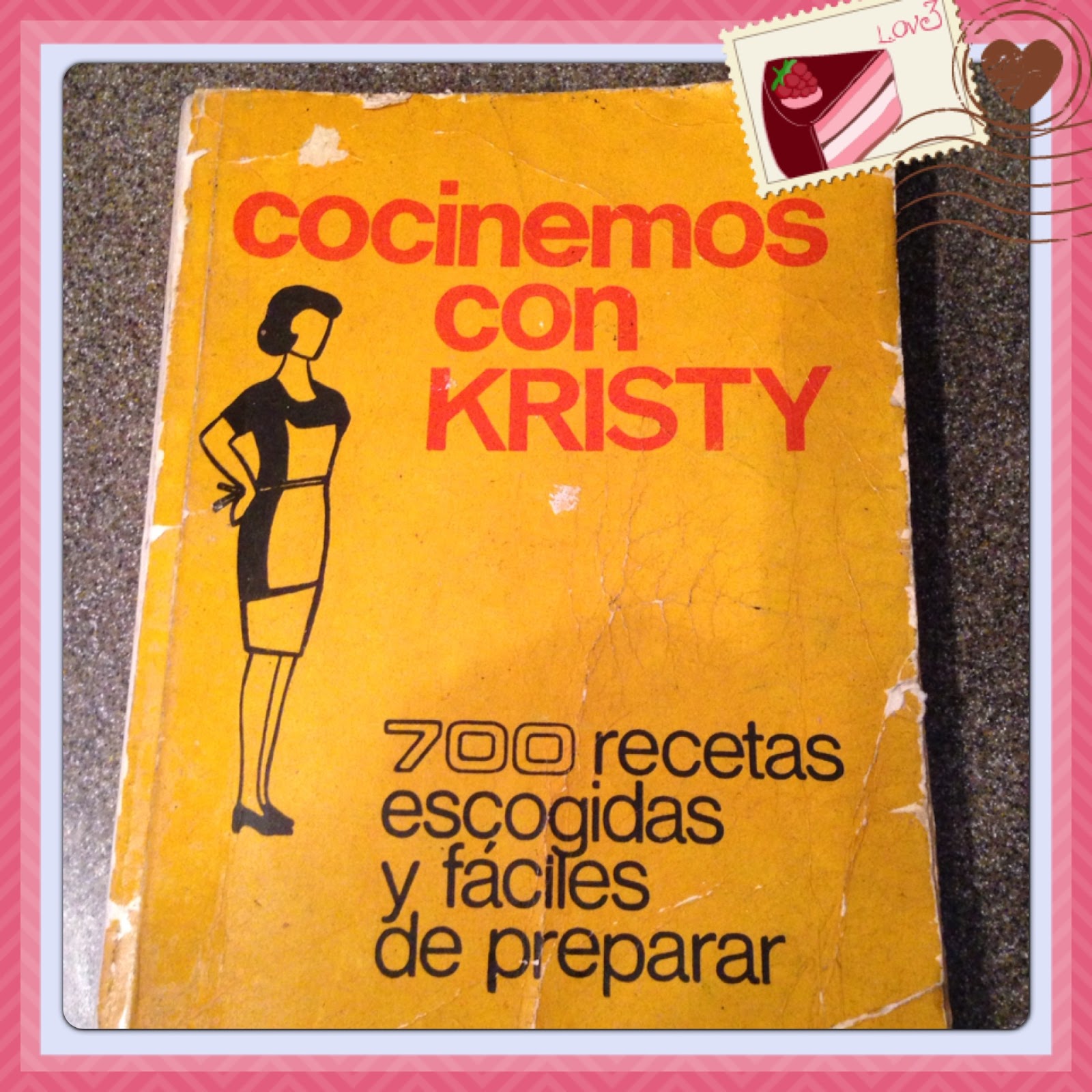
Third, I love and enjoy cooking and I think in my Country the recipes are delicious and healthy so I decided to take the best cookbook my grandmother gave it to my mom, and now it is mine , I think if I move to other Country I will have this recipe book to cook and share the different varieties of food of my country.
We life in a diverse world ,our families have different cultures, and lifestyles, languages, religions, clothing food, rituals, holidays. But we need to understand learn from others and respect their backgrounds. we need to be sensitive and open.
viernes, 28 de junio de 2013
research
RESEARCH

What insights have you gained about research from taking
this course?
Doing this
course I think I learn more about research, how to do it and the importance for
research in early childhood is necessary to know more about that the science, medicine
tells us about it. Doing research we could make better decisions, and find more
information to a problem.
I learn about equality, that you always need to work with
ethics, and for that reason the confidentiality is important in doing research.
In what ways have your ideas about the nature of doing
research changed?
I think now I have the gain to investigate more, to have a
better understanding of the topics, different behavior, problems that we will
see in early childhood, in schools, and how I’m going to help with my knowledge
and investigation to the Field, and to the Children.
What lessons about planning, designing, and conducting
research in early childhood did you learn?
First that we need to have in mind that when we work with
children we need to respect them, and to know their behavior, their feelings,
for making good interview or strategies to gain their trust, and having good
relationship with them.
Also I think
is important to observe the children, when they play and when they learn.”Good
observation is fundamental to the task of good teaching.”(Mac Naughton G., Rolfe S. A.,& Siraj-Blatchford I. (2010). )
What were some of the challenges you encountered, and in
what ways did you meet them?
For me one of
the challenges was in select my topic, and how to work with making a good Hypothesis.
What are some of the ways your perceptions of an early
childhood professional have been modified as a result of this course?
That we need
to respect our differences, and our cultures, and work together is a good way
to gain more knowledge and more points of views of others, that would help in
understand and thinking always in the well- being of the children, working for
them and for their good development.
References
Mac Naughton G., Rolfe S. A.,
& Siraj-Blatchford I. (2010). Doing early childhood: International
perspectives on theory & practice. (2nd ed.). New York, NY:
McGraw Hill
sábado, 8 de junio de 2013
Research Around the World
Research tells us that an
educator’s pedagogy is one of
the most important
aspects when assessing the quality of children’s learning. So early childhood
educators need to carefully consider and question their pedagogy and
corresponding practices.

I chosse Early Childhood Australia: This is the Australian equivalent to the U.S. based NAEYC. You
can access several links to early childhood research from the menu on the left
side of the home page.
http://www.earlychildhoodaustralia.org.au/
http://www.earlychildhoodaustralia.org.au/
Some of the International Topics of research are:
Research Implication for Preschool early literacy
instruction.
Quality Care and education through neurobiological research.
The brain research Early Childhood Australia.
Why play based learning? Early Childhood Australia
Australian an British Research into childhood obesity.
There are some topics of research that have valuable
information about the good development of the children ,and the importance of
the brain development in the early years of life, the Quality care, good relationships,
early literacy instruction, play is important for learn. For me all the topics are important because they
all have to do with the proper development and growth of children.
·
the early childhood researcher can make research
practice more transparent and assist children to participate more effectively,
as collaborators rather than as subjects.
Information That I found about an
important website that help parents and care givers:
“Talaris”
is committed to supporting parents and caregivers by sharing the latest
findings and most current research in early childhood development.
Teaching
strategies has acquired the Parenting Counts
product line, our research-based family of products designed to support parents
and caregivers in raising socially and emotionally healthy children.
The goal for Talaris has always been to help
parents and caregivers understand that learning begins at birth, the foundation
for lifelong learning and relationships rests on the social and emotional
development from birth to five, and the parent-child relationship is the most
essential factor in a child’s healthy development. In the early years, our
emphasis was funding research at the University of Washington. We created the
Center for Mind, Brain and Learning (CMBL), which later became the Institute
for Learning and Brain Sciences (I-LABS), and made John Gottman’s Bringing Baby Home project
possible.
We developed Parenting Counts, a compilation of
resources and materials to help parents and caregivers learn to interact with
children in everyday situations.
http://www.talaris.org/our-research/
sábado, 25 de mayo de 2013
Research that Benefits Children and Families
Research
that Benefits Children and Families—Uplifting Stories
I want to
share a story of the son of a friend In South American, Ecuador. Her son was diagnosed
with Hyperactivity and was medicated. The first doctor was wrong, the report
that the doctor gave to the school caused a terrible damage for the child, the
people in school called to the child: ” the problem child”, they began to label
him. For that reason his self esteem was low. His grades began to drop, and his
desire to study.
So his mother was seeking help in a person who
makes more studies and test in investigation of problems of hyperactivity, and
attention. When she found a good
researcher, that person wanted well being of the children and the first thing
that she did was to be friend for the child, then she begin to talk with him,
and making some test of drawing, talking with his pediatric and working
together. And the conclusion of this case is that that boy never had
“hyperactivity” he only had a behavior problem because in his house there was no limits, and he grew in an environment
of family problems, their parents was divorced, and he also grow without rules.
In this
case you could see the two ways of research in one case it made a damage for
the kid in his self-esteem, and in the other way the good research help to him
in not to be label anymore, and to resolve the behavior problem.
“Research benefits children, without
such research, we would know less about children’s points of view, their wants
and needs and their possibilities.”(Glenda Mac Naughton, Sharne A. Rolfe, &Iran
Siraj-Blatchford.2010)
THE GOAL OF EFFECTIVE CLASSROOM MANAGEMENT IS NOT CREATING "PERFECT" CHILDREN, BUT PROVIDING THE PERFECT ENVIRONMENT USING RESEARCH-BASED STRATEGIES THAT GUIDE STUDENTS TOWARD INCREASINGLY RESPONSIBLE AND MOTIVEATED BEHAVIOR."
THE GOAL OF EFFECTIVE CLASSROOM MANAGEMENT IS NOT CREATING "PERFECT" CHILDREN, BUT PROVIDING THE PERFECT ENVIRONMENT USING RESEARCH-BASED STRATEGIES THAT GUIDE STUDENTS TOWARD INCREASINGLY RESPONSIBLE AND MOTIVEATED BEHAVIOR."
sábado, 18 de mayo de 2013
My Personal Research Journey
My topic: How the importance of PLAY in the early years

As we know “play is essential to development because it contributes to the
cognitive, physical, social, and emotional well-being of children and youth”.
(Ginsberg, K. (2007). Play allows children to create and explore the
world, practicing adult’s roles, and to negotiate for problem resolution. Physical
play helps in their motor skills, communication, and math skills...
I
think we need to provide to the children an environment where young children are safe to
play and explore at their own place. And let them know to the teachers the
importance of play,
Because now a days there are
some schools that removed recess of their curriculum and take away the children
the importance of play and exploration outside.
This topic that I chose
passionate to me ,I want to know more about the importance of play, and why
play helps and is importance for the good development of the children, what are
some of the consequences in children who do not play.
Suscribirse a:
Entradas (Atom)